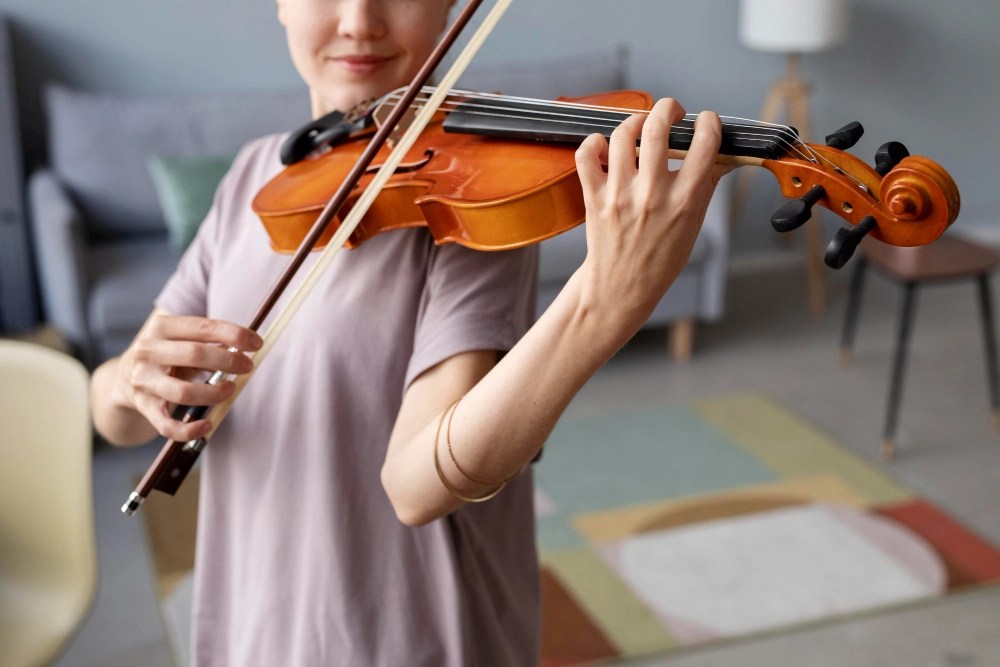
Most adults assume any qualified violin teacher will do, since the instrument and the basic technique do not change from one studio to the next. What actually varies enormously is teaching approach: whether lessons follow a graded exam syllabus or a more flexible repertoire-based method, whether the format is one-to-one or group, and whether the teacher has any real experience with adult beginners rather than only with children. Working out how to choose violin lessons in Singapore that fit an adult schedule and learning style matters more than picking whichever studio has the nearest location.
Group Classes Versus Private Lessons
Group lessons cost less and provide the social element some adult learners want, but the pace is set by the slowest progressing student in the room, which frustrates anyone hoping to move quickly. Private lessons cost more per session but allow the teacher to adjust technique correction, repertoire choice and pacing entirely around one student, which matters more for violin than for many instruments because bow hold and left-hand position need constant, individual correction in the early months.
Suzuki Method Versus Conventional Grading
The Suzuki method builds ability by ear and repetition before introducing notation in depth, which suits younger children well but can frustrate adults who want to read music from the outset. A conventional syllabus-based approach, working toward ABRSM or Trinity grades, gives a clear progression ladder and a recognised benchmark, which many adult learners find more motivating even without any intention of sitting the actual exam.
Why Teaching Adults Is a Different Skill
An adult beginner brings different physical constraints, often stiffer shoulders and less flexible fingers than a child starting young, and a different set of anxieties, usually a fear of sounding bad in front of anyone. A teacher experienced mainly with children may default to a pace and a tone built for young students, which reads as patronising to an adult and rarely accounts for the specific tension adults carry in the bow arm.
What a Trial Lesson Should Reveal
A single trial lesson shows more than any studio brochure, because it reveals whether the teacher actually listens before correcting, whether feedback is specific rather than generic, and whether the student leaves with a clear sense of what to practise next. Before committing to a term of lessons, use a trial lesson to judge a teacher’s approach to adult students rather than judging purely on the studio’s marketing materials or the teacher’s performance credentials.
Instrument Rental Before You Buy
Buying a violin before confirming the lessons will stick is a common early mistake, since a beginner cannot yet judge instrument quality and may abandon lessons within months. Most reputable studios offer rental instruments at a modest monthly cost, which removes this risk entirely and allows a first purchase decision to be made once the student, and the teacher, have a clearer sense of what level of instrument actually matters.
How Progress Is Actually Measured
Progress in the first year is more about intonation accuracy and bow control than about repertoire difficulty, and a good teacher will track this explicitly rather than simply moving a student through a songbook. Ask how the teacher documents progress between lessons, whether through a practice diary, recorded clips, or specific technical checkpoints, since a studio with no tracking system at all makes it hard to tell whether a student is actually improving or simply attending.
Practice Expectations Between Lessons
Realistic practice for an adult beginner is fifteen to twenty minutes most days, not the hour a child in an intensive programme might be expected to manage, and a teacher who sets unrealistic practice targets for a working adult is setting up an early dropout. Clarifying practice expectations at the outset, rather than assuming, avoids the common pattern of an adult quietly giving up because the assigned workload never fit around a full-time job.
Cost Structures Worth Comparing
Per-lesson pricing varies with format and teacher experience, but the bigger cost difference often sits in enrolment structure: some studios require a full term paid upfront with no refund for missed sessions, while others allow pay-as-you-go scheduling. For an adult with an unpredictable work schedule, the flexibility of the payment structure can matter as much as the hourly rate itself.
Signs a Teaching Studio Is Well Run
A studio that schedules make-up lessons without friction, communicates clearly about examination timelines if relevant, and assigns a consistent teacher rather than rotating instructors term to term, tends to produce steadier progress. Frequent teacher turnover in particular disrupts the specific, ongoing correction that violin technique needs more than most instruments, since a new teacher often has to undo habits the previous one never caught.
Making the Decision
Choosing violin lessons in Singapore as an adult comes down to matching format and teaching philosophy to your own schedule and learning style, not to finding the studio with the most impressive exam results. A trial lesson, a clear sense of realistic practice time, and a rental instrument to start with remove most of the risk from a decision that otherwise feels harder to reverse than it actually is.


Leave a comment