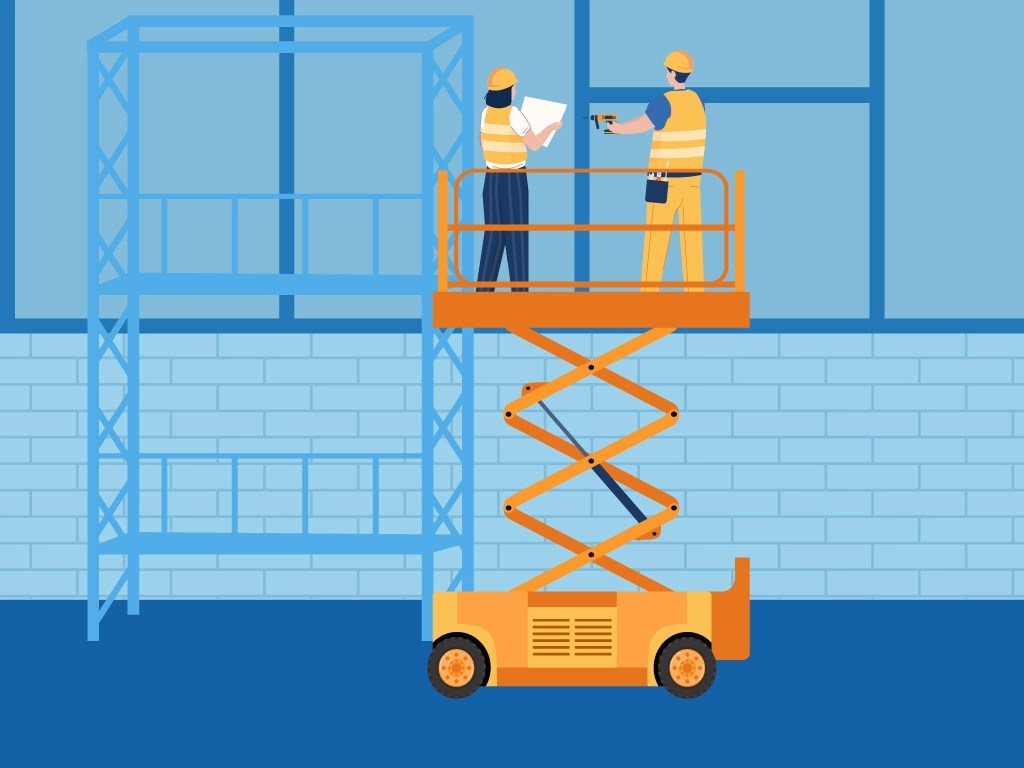
In the vast theatre of human industry, where steel frames reach towards the sky and workers navigate the vertical dimension of our built environment, there exists a fundamental truth: height demands respect, and respect demands knowledge. A scissor lift course represents far more than mere certification. It is an invitation to understand the elegant machinery that allows us to transcend our terrestrial limitations safely and competently.
Consider for a moment the remarkable ingenuity of the scissor lift itself. Like the ancient principles of leverage that Archimedes pondered, this machine transforms simple hydraulic pressure into controlled vertical movement. Yet without proper training, this marvel of engineering becomes a potential hazard. This is where structured education intervenes, transforming operators into informed custodians of workplace safety.
What Constitutes a Comprehensive Scissor Lift Course?
A properly designed scissor lift course encompasses both theoretical knowledge and practical application, recognising that true competence emerges only when understanding meets experience. The curriculum typically spans several crucial domains:
Theoretical Foundations:
- Understanding the physics of stability and load distribution, forces that govern not just scissor lifts but the very structures we build
- Recognising hazard categories: overhead obstructions, ground conditions, weather factors, and electrical hazards
- Comprehending manufacturer specifications and the regulatory frameworks that protect workers across industries
Practical Skills Development:
- Pre-operational inspection protocols that transform routine checking into systematic safety practice
- Controlled operation techniques in progressively challenging scenarios
- Emergency response procedures, because preparedness distinguishes the professional from the merely trained
The beauty of a well-structured course lies in its progression from simple to complex, allowing each participant to build confidence alongside competence.
The Legislative Imperative: Why Certification Matters
In the United Kingdom, the Health and Safety at Work Act 1974 establishes a framework within which all workplace activities must operate. The Provision and Use of Work Equipment Regulations 1998 (PUWER) specifically mandate that operators of mobile elevating work platforms, including scissor lifts, must receive adequate training and demonstrate competence.
This is not bureaucratic excess but wisdom codified. Statistics from the Health and Safety Executive reveal that falls from height consistently rank among the leading causes of workplace fatalities. A scissor lift course addresses this grim reality directly, transforming potential tragedy into prevented incident through systematic education.
Consider these sobering facts:
- Approximately 40% of workplace falls involve mobile elevating work platforms when operators lack proper training
- Certification reduces incident rates by upwards of 60% in comparable industrial settings
- Employers face substantial legal liability when untrained personnel operate elevated equipment
What You Will Master in a Quality Scissor Lift Course
The journey through certification reveals layers of knowledge, each building upon the last. Participants discover that operating a scissor lift is not merely about moving up and down. It is about thinking three-dimensionally, anticipating consequences, and maintaining constant situational awareness.
Core Competencies Include:
Equipment Familiarity
Understanding the anatomy of various scissor lift models (electric versus diesel, indoor versus rough-terrain variants) and how design differences inform operational protocols.
Safety Protocols
Learning to calculate platform capacity including personnel, tools, and materials; recognising the importance of fall protection systems; and understanding ground pressure considerations that prevent tip-over incidents.
Environmental Assessment
Developing the ability to evaluate work sites by identifying soft ground, overhead clearances, wind conditions, and proximity to electrical sources that could compromise safety.
Rescue Procedures
Preparing for the unexpected through emergency descent training and understanding rescue protocols should equipment malfunction occur at elevation.
The Transformation: From Novice to Competent Operator
What distinguishes a scissor lift course from simple instruction is its transformative nature. Participants enter as individuals who may have observed scissor lifts but leave as operators who understand them: their capabilities, their limitations, and the responsibility that comes with controlling such equipment.
The practical assessment component typically includes:
- Demonstrating thorough pre-use inspection procedures that become second nature
- Executing controlled manoeuvres in confined spaces where precision matters
- Responding appropriately to simulated emergency scenarios that test decision-making under pressure
This progression mirrors the scientific method itself: observe, hypothesize, test, refine, and ultimately master.
Selecting Your Training Provider: A Critical Decision
Not all training programmes achieve equal standards of excellence. When choosing a scissor lift course, consider these essential criteria:
Look for accreditation from recognised bodies such as the International Powered Access Federation (IPAF) or the Construction Plant Competence Scheme (CPCS). These organisations maintain rigorous standards that ensure training quality.
Evaluate the instructor-to-student ratio. Optimal learning occurs in smaller groups where individual attention is possible. Examine the training facilities: do they offer varied scissor lift types and realistic operational scenarios?
Questions to pose to potential providers:
- What is your pass rate, and what support do you offer those who require additional training?
- Does certification include both theoretical assessment and practical evaluation?
- What refresher training opportunities exist, recognising that competence requires maintenance?
The Broader Context: Safety as Civilisational Achievement
Step back and consider what workplace safety training represents in the grand sweep of human progress. We are perhaps the only species that systematically educates its members to prevent harm. A scissor lift course is a small but significant expression of this remarkable commitment to human welfare.
Every certified operator becomes part of a safety culture that values life over convenience, protocol over expedience. In this sense, completing such training is not merely a career requirement but a participation in collective responsibility.
Conclusion: Ascending with Confidence
The decision to undertake a scissor lift course represents an investment in capability and safety simultaneously. It acknowledges that working at height need not be hazardous when knowledge illuminates risk and training builds competence. As you consider certification, remember that you are not simply learning to operate machinery. You are joining a tradition of workers who understand that elevation, whether literal or metaphorical, demands preparation, respect, and unwavering attention to safety.
The sky may not be the limit, but reaching it safely requires more than ambition. It requires training.
 Education blog
Leave a comment